Repair may make sense when
- The failure is isolated.
- The system has otherwise been reliable.
- The repair is reasonable for the equipment condition.
- There is no pattern of repeated major problems.

If your air conditioner is aging, breaking down repeatedly, struggling to cool the house, or facing a major compressor or coil repair, APCA AC and Heating Repair can help you compare repair and replacement before you invest in a new system.
We provide licensed HVAC replacement and AC installation throughout Katy, Texas, with equipment options selected around your home, airflow, comfort goals, efficiency and budget—not simply the tonnage printed on the old unit.
Need help deciding between repair and replacement? We can evaluate both paths.
Texas HVAC License: TACLB00140502E
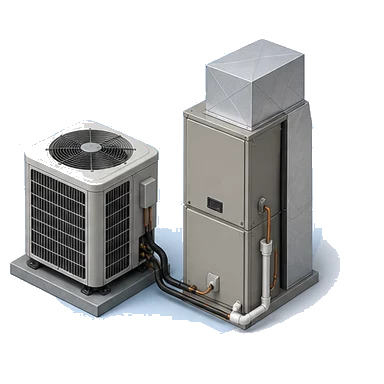
There is no universal “50% rule.” Equipment condition, repair history, comfort, failure scope, and likely future risk should be considered together.
Still troubleshooting? Review our AC repair service in Katy.
These planning categories help organize the conversation. Final equipment depends on capacity, matched components, availability, controls, and the approved installation scope.
Capacity, condenser, indoor coil, furnace or air handler, efficiency, refrigerant, ductwork, electrical work, drainage, controls, line-set condition, access, permits, and commissioning can all change the project total.
A condenser-only price and a complete matched-system price are not equivalent. Compare indoor components, controls, accessories, labor, and startup scope before comparing totals.
Read the 2026 AC replacement cost guide →2026 Houston-area planning ranges — not a project quote.
The exact scope depends on the home and chosen equipment. Ask which items are included, excluded, reused, or quoted separately.
System size should not come from square footage alone. The old tonnage is useful information, but it is not automatically the right answer for the replacement.
Insulation, windows, orientation, air leakage, additions, roofing, occupancy, and other improvements may have changed the load. The old system may also have been oversized or undersized, while the duct system may limit practical airflow.
When a formal residential load calculation is required, Manual J is the recognized residential sizing method. Equipment selection should also account for compatible, certified indoor and outdoor combinations.
Learn about ACCA Manual J →Your existing R-410A system is not automatically obsolete. Existing systems can still be repaired, and compatible service components may remain available.
The change matters when comparing complete new equipment. Many current systems use lower-GWP refrigerants such as R-32 and R-454B, depending on the manufacturer. EPA’s 2026 rule also allows qualifying higher-GWP equipment manufactured or imported before January 1, 2025, to continue being installed while that inventory remains. Refrigerants and components are not interchangeable; confirm the quoted matched system.
We review equipment age, repair history, comfort concerns, and the reason you are considering replacement.
The existing equipment, return and supply conditions, electrical service, drainage, access, and comfort patterns shape the scope.
We compare practical system paths around capacity, efficiency, controls, refrigerant, and budget.
Indoor and outdoor components, controls, accessories, and installation details are reviewed as one matched system.
The approved equipment is installed, evacuated, started, and checked for airflow and operating conditions.
We explain controls, routine care, and applicable equipment documentation before closeout.
Start with the existing system, comfort goals, and service address.
APCA combines repair diagnostics with equipment and installation planning. That means replacement starts with what the current system and home actually need.
Learn more about APCA.
Texas HVAC License: TACLB00140502E.
Diagnosis helps separate a practical repair from a replacement decision; we do not assume every major symptom needs new equipment.
Matching, refrigerant changes, component availability, and controls are considered without promising that one source is always the cheapest.
Compare essential, enhanced, and variable-capacity options around the property and approved scope.
Indoor equipment, outdoor equipment, duct airflow, drainage, electrical work, controls, and commissioning all affect the result.
Brand and model availability changes with the approved capacity, matched-system requirements, distributor inventory, refrigerant, and control platform. APCA confirms the specific manufacturer, indoor/outdoor match, and current availability in the estimate instead of promising every brand for every project.
Browse the existing HVAC installation and replacement service or review equipment through the APCA Group supply catalog.
Katy includes older homes, newer master-planned communities, one- and two-story layouts, gas-heat systems, heat pumps, and recently introduced lower-GWP equipment. Two homes with the same square footage do not necessarily need the same package. Existing duct capacity, indoor equipment, electrical conditions, drainage, access, and comfort patterns shape each replacement scope.
77449 · 77450 · 77493 · 77494
Share the installation address so APCA can confirm service-area coverage and the project’s local requirements.
Houston-area planning ranges for 2026 run from about $5,500 for basic scopes to $18,000 or more for high-efficiency or larger projects. Capacity, matched indoor equipment, ductwork, electrical work, access, controls, refrigerant, and commissioning all affect the actual estimate.
An isolated failure on an otherwise reliable system may support repair. Repeated repairs, a major compressor or coil failure, poor comfort, aging equipment, or an unfavorable combination of repair cost and future risk can make replacement worth comparing. There is no universal percentage rule that decides every home.
Timing depends on the equipment, scope, access, electrical or duct changes, inspection requirements, and conditions found during installation. APCA confirms the expected schedule for the specific project instead of promising every replacement can be completed in one day.
Not automatically. The answer depends on the furnace condition, age, blower capability, indoor coil, controls, efficiency goals, and compatibility with the proposed outdoor equipment. Compare quote scopes carefully because a condenser-only change and a complete matched system are different projects.
Square footage and old tonnage are useful inputs, but they are not enough by themselves. Insulation, windows, orientation, air leakage, duct conditions, occupancy, and changes to the home affect the load. When a formal residential load calculation is required, Manual J is the recognized residential sizing method.
SEER2 is the seasonal cooling output divided by the electrical energy used under the current federal test procedure. It helps compare rated cooling efficiency, but comfort, sizing, equipment matching, controls, ductwork, and installation quality also matter.
Yes. Existing R-410A systems are not automatically obsolete or illegal. EPA rules allow components to remain available for servicing existing systems, subject to equipment compatibility and parts availability.
Many current residential systems use lower-GWP refrigerants such as R-32 or R-454B, depending on the manufacturer and matched equipment. EPA's 2026 rule also allows qualifying pre-2025 higher-GWP inventory to continue being installed while supplies last. The quoted equipment and refrigerant should be confirmed before purchase.
Heat pumps can provide both cooling and heating and are one system type to compare for the Houston climate. The electrical service, backup-heat strategy, indoor equipment, controls, home load, and comfort goals determine whether a heat pump is a suitable option.
Available brands and equipment families can change with distributor inventory, system requirements, and matched-system certification. APCA discusses currently available options for your scope rather than promising every brand or model on every project.
Tell us about the current equipment, repair history, comfort concerns, and service address. Photos of model labels or equipment are welcome when available.
Prefer to talk? Call (832) 906-4822.
An estimate follows evaluation of the actual scope. This form does not promise a price, installation date, financing, rebate, or tax credit.
Texas HVAC License: TACLB00140502E
Request an estimate or call APCA to discuss your current system.